


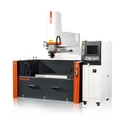
EDM (or electrical discharge) machines are one of the most popular CNC machine tools around. They belong to the class of machines capable of starting with raw material, like a block of steel, and making very complex parts with precise tolerances and amazing repeatability. EDM machines are used for many different types of metal fabrication and for cutting various materials from soft iron alloys to steels.
Design Freedom and Flexibility
EDM machine allows the creation of complex and intricate geometries of materials that are difficult to machine using conventional machining techniques. It also easily machines hard materials, such as tungsten and nickel, that conventional methods and machines find difficult or impossible to work on efficiently. Not only does it machine these materials, it does so efficiently, allowing machinists to make parts with intricate features using these materials.
Deformation-Free Parts
In EDM machine cutting tools do not make direct contact with the workpiece being machined, thus limiting the tendency for distortion as there is no frictional force acting it. The lack of contact ensures there are no distortions or breaks, especially when machining parts with extremely thin features.
Efficient Machining Regardless of Material Hardness
Machining tough materials like tungsten and carbide using conventional machining gives machinists a lot of problems, as it involves a lot of tool replacements and incorrectly machined parts. But with EDM machining components, using these materials becomes easier, as all it requires is the passage of an electric charge.
High Accuracy and Precision
This process produces parts accurately and with higher precision than conventional machining. EDM machine is a contactless process that cuts parts using electrical pulses. Being contactless, there is zero risk of mechanical deformity due to contact with the cutting tool, which increases the accuracy of the process.
High-Quality Surface Finish
Post-machining finishing is necessary to eliminate the machining marks left on the workpiece by conventional machining techniques. Due to EDM machines zero-directionality about surface smoothness, consistently smooth surfaces can be achieved without the need for additional attention.


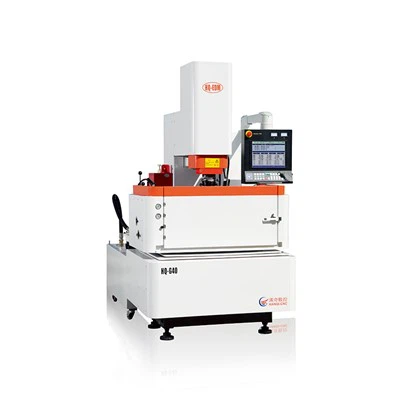

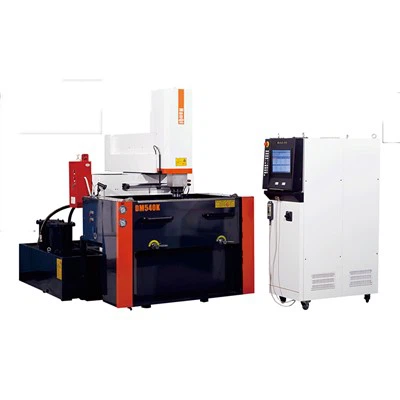


Product Categories
Latest Products



Why Choose Us
Construction Area
The company currently has a modern factory of more than 20 acres in the high-tech zone of Suzhou City, Jiangsu Province, with a construction area of more than 20,000 square meters, more than 80 employees, and engineers account for 30%.
Our service
24-hour service. The after-sales service in different countries is mainly provided by agents from different countries. If customers need to repair themselves, we can provide relevant spare parts.
Our Certificate
The company has passed the "ISO9001" quality management system certification, won the national "high-tech enterprise", "provincial private technology enterprise", and is the director unit of "China Machine Tool Industry Association Special Processing Machine Tool Branch".
Years Of Experience
Engaged in electric machining research and development services for over 20 years. Fully CNC mirror EDM was successfully developed and put into production. Introduce modern enterprise management mode (enhance soft power).
How EDM Machine Works
The basic electrical discharge machining process is really quite simple. An electrical discharge (spark) is created between two electrodes (solid electric conductors). The tool electrode is typically referred to as the electrode, and the workpiece electrode as the workpiece. The spark is visible evidence of the flow of electricity. This electric spark produces intense heat with temperatures reaching 8000 to 12000 degrees Celsius, melting/vaporizing almost any conductive material. These rapid, repeated electrical current discharges take place in a very small gap between the two electrodes, which never come in contact with each other. The spark gap (aka discharge gap, electrode gap) is maintained by adaptive machine controls to ensure a constant, stable distance as the electric discharge occurs up to millions of times per second.
Types of EDM Machine
Sinker EDM Machines
The sinker EDM, also known as a die, traditional EDM or Ram EDM. The use of die EDM allows the user to produce complex shapes. This method requires the electrode (usually made of graphite or copper) to be pre-machined into the desired shape and then the electrode is sunk into the article to form a negative of its original shape.
Wire EDM Machines
Wire EDM, also known as spark EDM, wire burning and wire erosion, uses a thin heated wire as an electrode. Hard diamond guides hold the wire steady. The wire electrode moves through the metal to craft a particular shape — though the wire itself does not actually touch the metal, its electrical discharges do. During wire EDM machining, the wire constantly unspools from an automated feeder, so wire is always available for cutting a smooth, uninterrupted form.
Hole drilling EDM Machines
Hole drilling EDM (or small hole drilling EDM) is used to machine holes. However, this technique can accurately machine extremely small and deep holes that don't require deburring compared to traditional hole drilling methods. This method also uses the same fundamental principles as die-sinking EDM. However, the cut is made with a pulsing cylindrical electrode with dielectric liquid fed into the cutting area while moving deeper into the workpiece.

What Are the Technological Parameters in EDM Machine?
Voltage: The voltage between the electrode and the workpiece is crucial. It determines when the electrical discharge occurs. Higher voltage can mean more aggressive machining, but it must be carefully balanced to avoid damaging the workpiece.
Current: This parameter dictates the intensity of the electrical discharge. In simple terms, the higher the current, the larger the amount of material removed per spark. Managing this is essential for achieving desired surface finishes and machining speeds.
Pulse Duration
Also known as "on-time", this parameter refers to how long the spark occurs. Longer pulse durations lead to deeper craters and more material removal but can affect the surface finish and integrity.
Duty Cycle
This represents the ratio of pulse duration to the total cycle time (including the off-time). It influences the cooling time and flushing efficiency, which are critical for maintaining workpiece integrity.
Gap Voltage
This refers to the voltage across the spark gap before discharge. It’s essential for initiating the spark and must be precisely controlled for efficient machining.
Dielectric Fluid Type and Pressure
The type of dielectric fluid used, and its pressure, greatly influence the EDM process. They affect the spark intensity, material removal rate, and the flushing away of eroded materials.
How Noisy Are EDM Machine When Operated?
When comparing the noise level of an EDM machine to other machining methods, it’s essential to remember there are many different types of EDM machines on the market. Some are pretty loud, while others are much quieter. For example, you might think a plasma cutter would make a lot of noise because of all its sparks, but it’s significantly quieter than an electric motor running at full speed.
Similarly, although an EDM machine may use electricity for power instead of air pressure like with a milling machine or router bit (and therefore produce less heat), this doesn’t necessarily mean it’ll be quieter than these other options. It depends on how well built your particular unit is and what kind of material you’re working with; certain materials are naturally noisier than others when being cut into or drilled through (for example, metal tends to be louder than wood). In general, most EDMs tend not only to produce less heat but also require less airflow around them during operation, resulting in lower overall noise levels due to reduced air turbulence generated by their cutting action.
1. Steel: Including hardened and stainless steel varieties, known for their toughness.
2. Aluminum: Lightweight yet strong, ideal for various applications.
3. Copper: Known for its excellent electrical conductivity.
4. Brass: A copper alloy that’s easy to machine.
5. Titanium: Famed for its strength and corrosion resistance.
6. Tungsten Carbide: Extremely hard and wear-resistant.
7. Inconel: A nickel alloy, known for its ability to withstand extreme temperatures.
8. Hastelloy: Another nickel alloy, known for its corrosion resistance.
9. Graphite: Used for making EDM electrodes.
10. Silver: Valued for its thermal and electrical conductivity.
11. Gold: Often used in electrical connectors and other precision components.
12. Kovar: An alloy designed to withstand varied thermal expansion rates.

Application of EDM Machine
Mold and Die Making
EDM machining is often used as a complementary process in addition to conventional machining in the fabrication of molds and dies. As mentioned above, the wire cut type is typically used for forming blanks for the molds, the sinker type may be used to form complex shapes of the cavities, and the hole drilling may be used for creating pressure release holes.
Medical components
EDM is a critical technology in the medical sector, known for its high precision and accuracy, essential attributes for manufacturing medical devices where even slight deviations can have serious consequences. This technique produces intricate components such as cochlear implants, pacemakers, and neurostimulators.
Aerospace components
There are a lot of features on an aerospace part that cannot be made by some standard cutting tools, and that is where the EDM machining comes in. EDM machining is capable of producing challenging features with foremost, turbine rotor disc, thin slots, sharply squared holes, and very tight deep hole requirements.
Electronics Industry
Electronic parts have to fit to function optimally, this is especially true for the parts that conduct electricity. This makes the electronics industry one of the major beneficiaries of EDM since the technique only deals with conductive metals. EDM facilitates the production of connectors, sensors, and switches used in this industry. It also produces components such as electrodes, dies, and masks.
Components of EDM Machine
1. DC Pulse Generator: This serves as the power source for the machining operation, supplying DC power.
2. Voltmeter: The voltmeter is employed to measure the voltage during the operation.
3. Ammeter: Ammeters are used to measure the current flow. It's crucial for ensuring the presence of current during the operation.
4. Tool: The tool is connected to the negative terminal of the power source, while the workpiece is connected to the positive terminal. The dielectric fluid is delivered to the tool from the filter for the machining process. When the power supply is increased, sparks are generated between the tool and workpiece, initiating the machining.
5. Dielectric Fluid: This fluid possesses insulating properties, preventing the flow of current between points. It ionises into ions, facilitating the machining process between the tool and workpiece. 6. When the power supply is stopped, the fluid returns to its initial position.
6. Pump: The pump is responsible for transporting the dielectric fluid to the filter. It ensures a continuous flow of fluid from one source to another.
7. Filter: As the name suggests, the filter is used to remove various particles from the dielectric fluid. If there are dust particles present, the filter removes them before delivering the clean fluid to the tool for machining.
8. Servo-Controlled Feed: The servo-controlled feed system provides a constant and controlled feed for the machining operation, ensuring precision and consistency.
9. Fixture: Fixtures are used to securely hold the workpiece in place during the machining process, preventing movement or displacement.
10. Table: Tables serve as platforms to hold the workpiece in a stable position for effective and accurate machining operations.
Factors to Consider When Selecting EDM Machine
Define Your Application Requirements
Clearly understand the specific requirements of your applications, including the type of materials you'll be working with, desired precision levels, surface finish requirements, and production volume.
Consider Workpiece Size and Weight
Determine the maximum workpiece size and weight that the machine needs to accommodate. Ensure the EDM machine's work envelope matches your requirements.
Material Compatibility
Ensure that the machine is capable of working with the types of conductive materials you intend to machine, such as metals and alloys.
Tolerances and Precision
Consider the level of precision required for your applications. Different machines have varying levels of accuracy, so choose one that aligns with your needs.
Electrode Options
Consider whether the machine supports various types of electrodes, including graphite, copper, or tungsten. This provides versatility for different applications.
Tool Changer and Automation
If your applications require a variety of electrode sizes or types, consider a machine with a tool changer or automated system for efficient tool changes.
Dielectric System and Filtration
Evaluate the dielectric system's capacity and filtration capabilities. A robust dielectric system is crucial for efficient flushing and debris removal during machining.
Machine Rigidity and Stability
Look for a machine with a sturdy construction and good rigidity to ensure stable machining operations, especially for high-precision work.
Ease of Maintenance and Serviceability
Consider how easy it is to maintain and service the machine. Access to key components and user-friendly maintenance features can save time and effort.
Budget and Cost Considerations
Determine your budget and look for a machine that provides the best balance of features, performance, and cost within your budget constraints.
How to Maintain EDM Machine
Check whether there is garbage at the gas port of the EDM machine, and whether each valve and pressure gauge work normally.
Check whether all trachea joints are loose and all pipes are not damaged. Tighten or replace as necessary.
Check whether all transmission parts of EDM machine are loose, check the meshing of gears and racks, and adjust if necessary.
Loosen the tightening device and push it by hand to see if it can come and go freely. If there is an abnormal situation, adjust or replace it in time.
Check the clamping block, steel belt and guide wheel for looseness and tightness of the steel belt, and adjust if necessary.
Check the strong EDM generator and operating platform, whether the fastening screws and thread ends are loose, and clean the dust in the cabinet.
Check the performance of the buttons and selector switches, replace the damaged ones, and finally comprehensively inspect the drawing pattern inspection and the machine accuracy inspection.
EDM machine lubrication is important to overall performance. Always visually check for the proper lubrication of these surfaces. Some machines use grease, some use way oil and others use a combination of the two.
Precautionary Tips for Handling EDM Machines
Electric Shock
You may not be surprised to learn that electrical discharge machining presents a hazard of electrical shock. As an EDM operator, there are certain things you can do to minimize this risk. Never touch the electrode while the machine is in operation. Make sure that your work area is grounded. Make sure that the area around the machine is dry. Do not wear conductive clothing or accessories such as jewelry.
Attire
Wear appropriate eyewear, and never look directly at the spark. Wear closed toe, non-slip shoes with rubber soles. Shoes should be comfortable as well, since you may be standing for extended periods of time.
General Safety Tips
Keep your machine well-maintained. Your machine should clean and lubricated. When it needs maintenance, make sure the work is done by a well-qualified professional. Know your machine. One of the best ways to prevent accidents is to not do anything whose consequences you are not well aware of. Learning the idiosyncracies of your machine will minimize the unexpected. Keep the area around your machine free of flammable materials. Stay alert and give your undivided attention to machining. Intoxication on the job should be avoided.
FAQ
As one of the leading EDM machine manufacturers in China, we warmly welcome you to buy discount EDM machine from our factory. All customized machines are with high quality and low price.
fully closed loop wire cut edm machine with linear motor, high precision wire cut edm machine with servo motor, high precision fully cnc 5 axis control servo wire edm machine