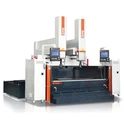
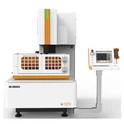
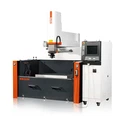
Both EDM and ECM are non-conventional machining methods; however, both processes have considerable differences. EDM, or electrical discharge machining, relies on localized spark erosion to remove material, whereas ECM, or electrochemical machining, utilizes electrolysis to dissolve the metal locally.
DIFFERENCES
In addition to the metal removal method, there are some other fundamental process differences.
Working fluid: EDM utilizes a dielectric fluid, usually deionized water or a hydrocarbon compound of sorts. This serves several purposes, all serving the ultimate goal of controlling electrical discharges to maintain accuracy removing material during the process. In order to get a high current density in the plasma channel, the fluid separates the working electrodes. It also helps prevent particle linkages that could short circuit and interrupt the process when it flushes the area. ECM, on the other hand, (both enable non contact process but mechanism is different) uses an electrolyte solution, helping perform the same task as a dielectric fluid, but in the opposite way. A salt-based liquid such as NaNO3 or NaCl covers the process and conducts electric currents between the cathode (the tool) and the anode (what is being worked on). The DC current gives the anode a positive electrode charge, allowing it to be oxidized. This oxidization is then stripped away (and flushed out with the solution) leaving an extremely smooth finish without any burrs or a recast layer.
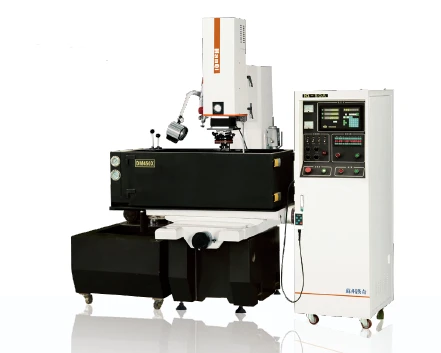
Power level: EDM's voltage can be anywhere from 50 to 400 Volts, generating tremendous energy in a spark. emitting a lower current ECM, though, is a low voltage, high current process-- electricity is being conducted through the electrolyte solution, carrying a much higher current than with EDM.
Tooling: Although neither process involves direct contact between the cathode and anode, EDM exhibits tool wear and ECM does not. Simplified, this is due to substantial heat in EDM that slowly alters the tool and the workpiece. ECM, however, doesn't have a chemical reaction that erodes the tool; therefore a tool could theoretically create infinite parts under ECM.
SIMILARITIES
Non-contact process: the tool or electrode does not come into contact with the work piece. A small gap is maintained and flushed with the working fluid.
Burr-free: Due to the material removal methods neither process is susceptible to burrs that occur in conventional fabrication methods such as milling and turning.
Electrical energy: Both processes require a power source, typically a pulsed DC power supply, to enable the metal removal.
Conductive materials: In general, both processes are limited to processing electrically conductive materials.
Material Properties: Properties of the material such as hardness, strength, brittleness, etc. do not restrict the ability to be machined with either process.