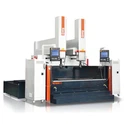
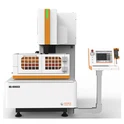
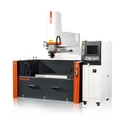
EDM machining primarily consists of two essential components: the workpiece, typically made of conductive material, and the electrode (tool), which generates electrical discharges to remove material from the workpiece through controlled sparks.
An EDM machine consists of the following parts:
DC Pulse Generator: This serves as the power source for the machining operation, supplying DC power.
Voltmeter: The voltmeter is employed to measure the voltage during the operation.
Ammeter: Ammeters are used to measure the current flow. It's crucial for ensuring the presence of current during the operation.
Tool: The tool is connected to the negative terminal of the power source, while the workpiece is connected to the positive terminal. The dielectric fluid is delivered to the tool from the filter for the machining process. When the power supply is increased, sparks are generated between the tool and workpiece, initiating the machining.
Dielectric Fluid: This fluid possesses insulating properties, preventing the flow of current between points. It ionises into ions, facilitating the machining process between the tool and workpiece. When the power supply is stopped, the fluid returns to its initial position.
Pump: The pump is responsible for transporting the dielectric fluid to the filter. It ensures a continuous flow of fluid from one source to another.
Filter: As the name suggests, the filter is used to remove various particles from the dielectric fluid. If there are dust particles present, the filter removes them before delivering the clean fluid to the tool for machining.
Servo-Controlled Feed: The servo-controlled feed system provides a constant and controlled feed for the machining operation, ensuring precision and consistency.
Fixture: Fixtures are used to securely hold the workpiece in place during the machining process, preventing movement or displacement.
Table: Tables serve as platforms to hold the workpiece in a stable position for effective and accurate machining operations.