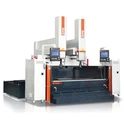
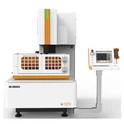
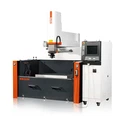
Dielectric fluid is used in EDM to submerge the electrode and the workpiece. It removes material from the workpiece by eroding or slicing it with an electric spark to achieve the appropriate shape. CNC programs control the electrode's motion, and it's essential to grasp a few fundamentals to ensure a smooth procedure.
Discharge Gap:
To generate sparks between the electrode and the workpiece, there must be a space, sometimes called a "discharge gap," which is usually in the 0.005 – 1 mm range. Sparks are not produced if the electrode and the workpiece are in touch. A servo mechanism in the EDM system regulates this gap and the movement of the electrode.
Electrode Wear Ratio:
This ratio is calculated by dividing the volume of material lost from the tool electrode by the amount of metal retrieved from the workpiece. It is sometimes represented as a percentage of the overall mass loss of the instrument divided by the total amount of work done.
Polarity
In this approach, one must be positive and the other negative to apply a voltage between the workpiece and the electrode. So when the electrode is negative and the workpiece is positive, it is usual practice to refer to the situation using the term "positive polarity" or simply "polarity." Likewise, when the electrode is positive and the workpiece is negative, this configuration is referred to as having "reverse polarity."
We suggest you become familiar with the mix of the electrode and workpiece materials you will use to identify which settings and process parameters will work best for your application. Polarity can affect the rate of material removal, often known as the "electrode wear ratio," as well as the surface roughness, which in turn can affect wear, speed, and stability.
Removal Rate
The pace at which the spark eliminates material from the workpiece. Common mass or volume units, such as [g/min] or [mm3/min], are used in quantification.